Autonomous Vehicle Hardware Safety Architecture: Lessons from SOTIF and ISO 21448
ISO 26262 addresses failures: what happens when hardware breaks. ISO 21448 (SOTIF, Safety of the Intended Functionality) addresses a fundamentally different problem: what happens when hardware works exactly as designed but the system still behaves unsafely.
For autonomous vehicle hardware engineers, SOTIF is transforming how sensor architectures are designed, how compute platforms are specified, and how redundancy strategies are constructed.
The SOTIF Problem
Consider a LIDAR sensor that is working perfectly within its specifications. It accurately measures the distance to every object in its field of view. But a particular combination of rain, fog, and low sun angle creates a scenario where a pedestrian's return signal is indistinguishable from background noise. The sensor works correctly (it reports no obstacle) but the system's intended functionality (detecting pedestrians) fails.
This is a SOTIF problem. The hardware is not broken. The specification is not violated. But the system is unsafe because the specification was insufficient for the operational scenario.
ISO 21448 requires that autonomous system designers systematically identify these "triggering conditions", combinations of environmental factors, operating conditions, and system states that can cause the intended functionality to fail, and either design the hardware to handle them or restrict the operational domain to exclude them.
Sensor Architecture Implications
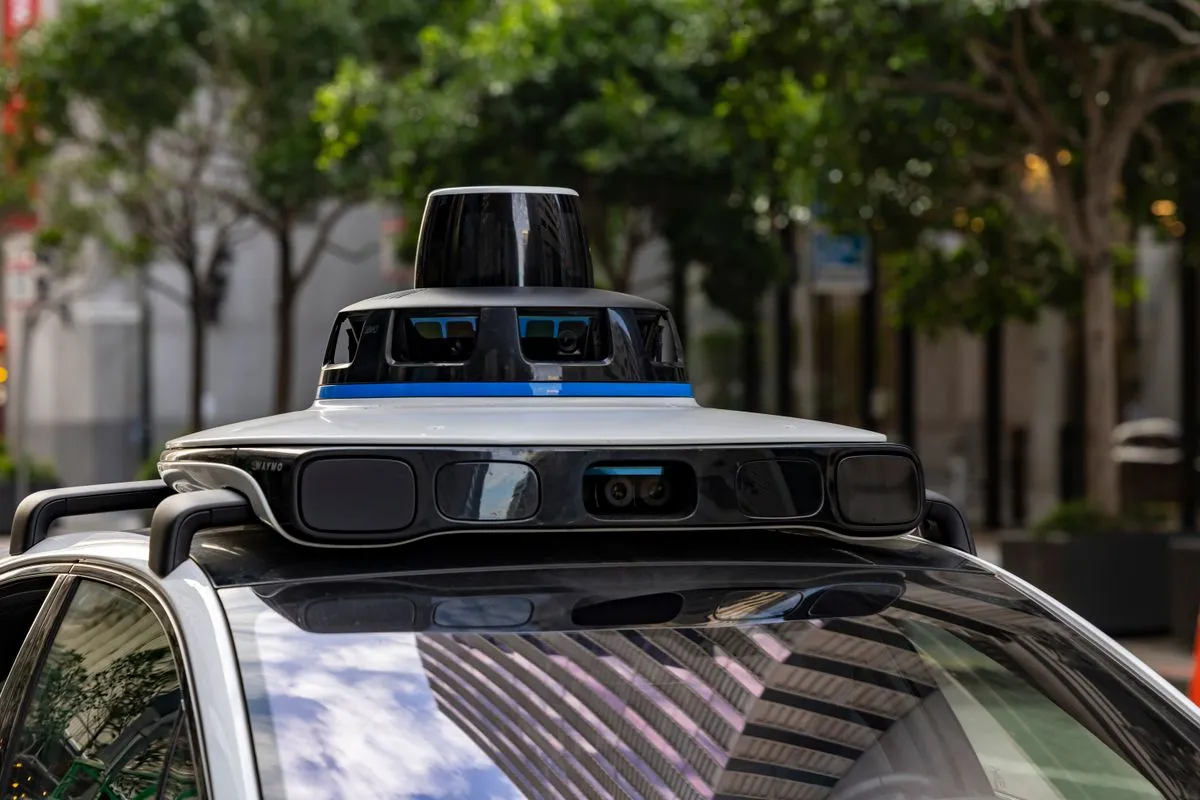
SOTIF has profound implications for sensor architecture. The traditional approach to sensor redundancy (add more of the same sensor type) is insufficient for SOTIF compliance because identical sensors share the same triggering conditions. Two LIDAR sensors will both fail to detect a pedestrian in the same rain/fog/sun scenario.
SOTIF demands "diversity": using fundamentally different sensing modalities to ensure that the triggering conditions of one sensor do not overlap with those of another. A typical SOTIF-compliant sensor architecture combines:
LIDAR for precise 3D geometry, effective in darkness but degraded by precipitation and dust.
Radar for velocity measurement and all-weather operation, but with limited angular resolution and difficulty distinguishing between objects.
Cameras for classification and traffic sign recognition, but dependent on lighting conditions and affected by glare, shadows, and lens contamination.
Ultrasonic sensors for close-range detection, effective in all weather but limited in range and precision.
The hardware engineering challenge is not just installing these sensors but integrating them into a coherent perception system. This requires precise temporal synchronization (all sensors must have a common time reference), spatial calibration (the relative positions and orientations must be known to sub-centimeter accuracy), and a compute architecture that can fuse the data from all sensors in real time.
Compute Platform Requirements
SOTIF's emphasis on identifying and handling triggering conditions drives computational requirements that exceed anything previously attempted in automotive systems.
The perception system must not only detect and classify objects but also estimate the confidence of its detections. A detection with 99.9% confidence in clear weather might drop to 95% confidence in heavy rain. The planning system must adapt its behavior based on this confidence: slowing down, increasing following distance, or requesting human intervention when perception confidence drops below safe thresholds.
This confidence estimation requires significantly more computation than simple detection. Neural network architectures must be modified to output uncertainty estimates alongside classifications. Sensor fusion algorithms must propagate uncertainty through the fusion pipeline. And all of this must happen within the real-time constraints of the control loop, typically 50-100ms for the full perception-planning-control cycle.
The hardware implications are substantial. Current autonomous vehicle compute platforms consume 500-2000W of power and generate corresponding heat. The compute hardware alone can account for 10-15% of the vehicle's total power consumption. Designing a compute platform that meets SOTIF's computational requirements while remaining within the vehicle's thermal and power budgets is one of the defining hardware challenges of autonomous vehicle development.
Redundancy Strategy Evolution
SOTIF is also driving changes in how redundancy is implemented in autonomous vehicle architectures.
Traditional automotive safety uses "hot standby" redundancy: a backup system that takes over immediately when the primary system fails. This approach works well for fail-operational systems where the backup must maintain full functionality.
SOTIF introduces the concept of "graceful degradation": the system recognizes that its performance is degraded (due to triggering conditions, not hardware failure) and transitions to a safer operating mode. This might mean reducing speed, limiting lane-change maneuvers, or activating a "minimal risk condition" (safely stopping the vehicle).
The hardware architecture must support these graceful degradation modes. The compute platform must have enough spare capacity to run additional diagnostic and confidence-estimation algorithms when conditions degrade. The communication architecture must support the increased data flow from enhanced sensor processing. And the power system must be designed to handle the variable load profiles that graceful degradation creates.
The Validation Challenge
Perhaps the most challenging aspect of SOTIF for hardware teams is validation. ISO 26262 validation can be approached through analysis and testing against defined fault models. SOTIF validation requires demonstrating safety across an effectively infinite space of operating scenarios: every possible combination of weather, traffic, road geometry, and sensor condition.
This drives the adoption of hardware-in-the-loop (HIL) simulation systems of unprecedented complexity. A SOTIF-grade HIL system must simulate not just the vehicle dynamics but also the physical environment: the optical properties of rain, the radar cross-section of different vehicle types, the specific failure modes of each sensor under each triggering condition.
Building and maintaining these HIL systems is a major hardware engineering effort in its own right. The sensor simulation hardware must be calibrated and validated against real-world measurements. The real-time compute platform must simulate complex physics models within the control loop timing. And the test automation infrastructure must execute millions of scenarios while logging and analyzing the results.
Engineering for the Unknown
SOTIF represents a philosophical shift in safety engineering: from proving that the system handles known failure modes to demonstrating that the system behaves safely in unknown scenarios. For hardware engineers, this shift demands a new level of rigor in sensor specification, compute architecture, and system integration.
The autonomous vehicle industry is learning, sometimes painfully, that safety cannot be achieved by hardware specification alone. It requires a deep understanding of how hardware interacts with the physical world, and the humility to acknowledge that this interaction will always contain surprises.
The hardware teams that succeed will be those that build systems designed not just to perform, but to know the limits of their performance, and to act safely when those limits are reached.