Edge Computing Hardware for Industrial IoT: Designing for the Factory Floor
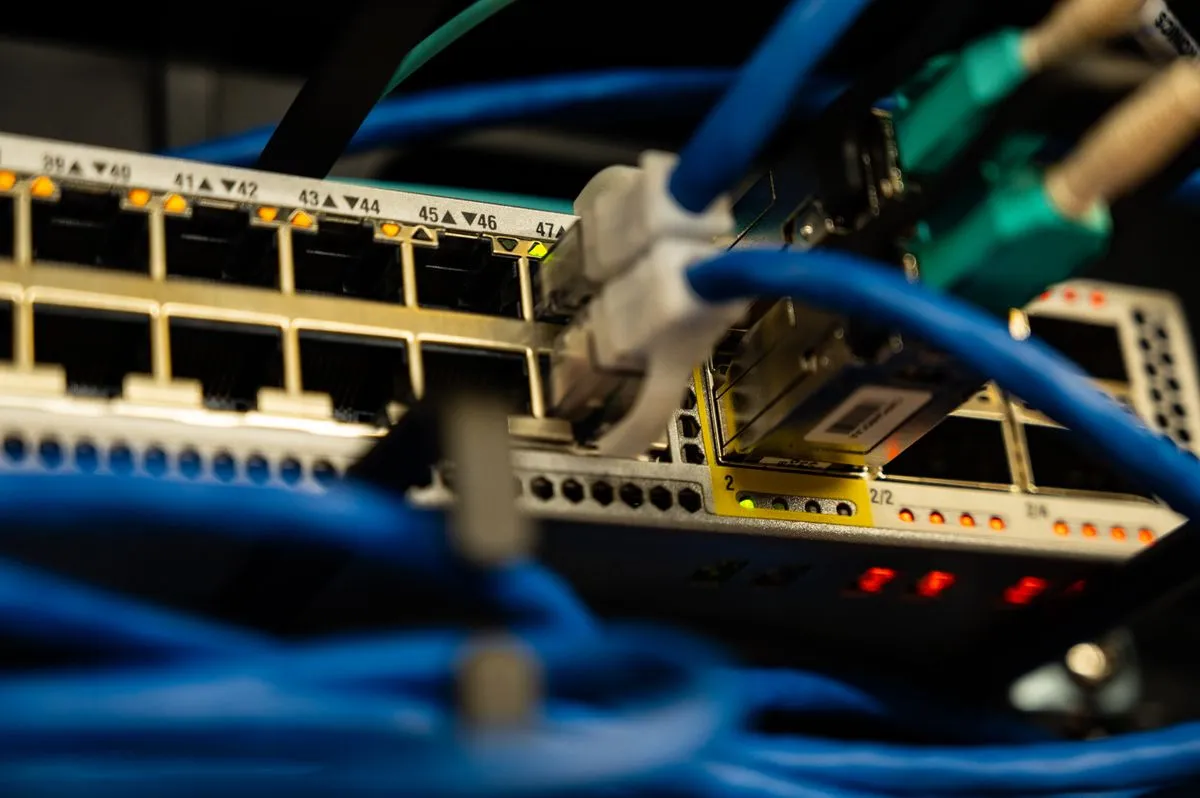
The promise of Industrial IoT (IIoT), connecting factory equipment, sensors, and actuators to create intelligent, self-optimizing production systems, depends entirely on edge computing hardware that can operate reliably in environments that would destroy a typical IT server in hours.
Designing edge computing hardware for industrial environments requires a fundamentally different mindset from designing consumer or enterprise IT equipment. The operating conditions are harsher, the reliability requirements are higher, the lifecycles are longer, and the consequences of failure are more severe.
The Environmental Reality
A factory floor is hostile territory for electronics. Temperatures routinely range from -20°C to +60°C in outdoor applications, with rapid thermal cycling that stresses solder joints and component connections. Humidity can range from near-zero (creating electrostatic discharge risks) to near-saturation (creating condensation and corrosion risks). Vibration from heavy machinery transmits through mounting surfaces at frequencies and amplitudes that can fatigue solder joints and loosen connectors.
Beyond these physical stresses, the electromagnetic environment in an industrial facility is ferocious. Variable-frequency drives switching kilowatts of power generate broadband electromagnetic interference. Arc welders create transient voltages that can couple into signal cables. Lightning strikes on poorly grounded facilities can induce damaging surges on power and communication lines.
Designing edge computing hardware to survive this environment requires attention to every aspect of the design: from component selection through PCB layout to enclosure design and cable management.
Component Selection: The 10-Year Commitment
When a hardware engineer selects a consumer-grade processor for a laptop, they know that the product lifecycle is 3-5 years. When they select a processor for an industrial edge device, they're making a 10-15 year commitment. The device must be manufactured, deployed, supported, and maintained for a decade or more.
This lifecycle requirement fundamentally changes component selection criteria. Industrial-grade components are specified for extended temperature ranges (-40°C to +85°C or wider), are available with long-term supply guarantees (10-15 years), and have been qualified for the specific stress conditions of industrial deployment.
The component cost premium for industrial-grade parts, typically 2-5x consumer-grade, is easily justified by the lifecycle cost savings. A field replacement of an edge device that has failed due to a consumer-grade component operating outside its specifications costs 10-100x the component cost premium.
Thermal Design: No Fans Allowed
Industrial edge devices must be fanless. Fans are the single most common failure point in electronic systems, and in industrial environments, fan failures are accelerated by dust, moisture, and chemical contamination. A device with a fan will typically last 3-5 years in an industrial environment before the fan fails, compared to 15+ years for a properly designed fanless device.
Fanless thermal design requires careful attention to the entire thermal path from the heat-generating components to the ambient environment. The key elements are:
Thermal interface materials (TIMs): High-performance thermal pads or thermal adhesives that conduct heat from the processor die to the heatsink. The TIM must maintain its thermal performance over the device's lifetime. Many TIMs degrade over time, losing thermal contact and allowing junction temperatures to rise.
Heatsink design: Industrial heatsinks are typically integrated into the device's enclosure, using the entire enclosure as a heat dissipation surface. This requires careful fin geometry optimization, often using computational fluid dynamics to account for the natural convection patterns around the device in its specific mounting orientation.
Power management: Aggressive power management, reducing processor clock speed and voltage when full performance is not required, can reduce peak thermal dissipation by 50% or more. The thermal design should be specified for continuous worst-case operation, not for benchmark peak loads.
Communication: The Deterministic Imperative
Industrial control applications demand deterministic communication: guaranteed delivery of data within a bounded time. Consumer networking technologies (Wi-Fi, standard Ethernet) provide "best effort" delivery with no timing guarantees, making them unsuitable for real-time control applications.
The industrial Ethernet landscape in 2026 includes several deterministic protocols:
EtherCAT is the dominant protocol for motion control applications, providing cycle times as low as 100μs with jitter below 1μs. Its distributed clock synchronization mechanism enables coordinated control of multiple axes with sub-microsecond timing.
PROFINET IRT (Isochronous Real-Time) provides deterministic communication with cycle times from 250μs, widely used in process automation and factory automation.
TSN (Time-Sensitive Networking) is the emerging standard that promises to unify deterministic industrial communication on standard Ethernet infrastructure. TSN-capable Ethernet hardware is beginning to appear in industrial edge devices, although the ecosystem is still maturing.
Designing edge computing hardware with the appropriate communication interfaces, often multiple protocols simultaneously, requires careful attention to the real-time performance of the network interface hardware and drivers. A general-purpose Ethernet controller may not meet the deterministic timing requirements of industrial protocols without specialized hardware support.
Security: The Overlooked Dimension
Industrial edge devices are increasingly connected to enterprise networks and the internet, making them targets for cyberattacks. The consequences of a compromised industrial edge device can extend beyond data theft to physical damage: manipulating control parameters, disabling safety systems, or causing environmental incidents.
Hardware security features for industrial edge devices include:
Secure boot: Ensuring that only authenticated firmware can execute on the device, preventing malicious firmware from being installed.
Hardware security modules (HSMs): Dedicated cryptographic processors that store keys and perform cryptographic operations in tamper-resistant hardware, protecting against both network attacks and physical tampering.
Trusted Platform Modules (TPMs): Industry-standard security chips that provide secure key storage, platform integrity verification, and cryptographic acceleration.
Physical tamper detection: Sensors that detect enclosure opening, drilling, or other physical intrusion attempts, triggering key erasure or device lockdown.
The Design Process Challenge
Designing industrial edge computing hardware requires collaboration across multiple engineering disciplines: electronics, firmware, mechanical, thermal, EMC, and security. Each discipline has its own requirements, constraints, and trade-offs, and these trade-offs are deeply interconnected.
A processor selection that optimizes computational performance may create an unsolvable thermal problem. A communication interface that meets real-time requirements may compromise security. An enclosure design that achieves IP67 ingress protection may restrict thermal dissipation.
Managing these cross-disciplinary trade-offs requires engineering infrastructure that provides visibility across all domains: a single source of truth where the impact of a design decision on all other domains is immediately visible. Without this visibility, design conflicts are discovered during integration testing, when they are most expensive to resolve.
Building for the Long Term
Industrial edge computing hardware is not built for the next product cycle. It's built for the next decade. Every design decision must be evaluated against a 10-15 year operational horizon. The components must be available. The firmware must be updateable. The security must be maintainable. And the performance must remain adequate as industrial applications evolve.
This long-term perspective demands engineering discipline and infrastructure that goes far beyond what consumer electronics development requires. The teams that get it right build products that become the invisible backbone of industrial operations. The teams that cut corners build products that become expensive liabilities.