The Hardware-Firmware Co-Design Revolution: Breaking Down the Last Silo
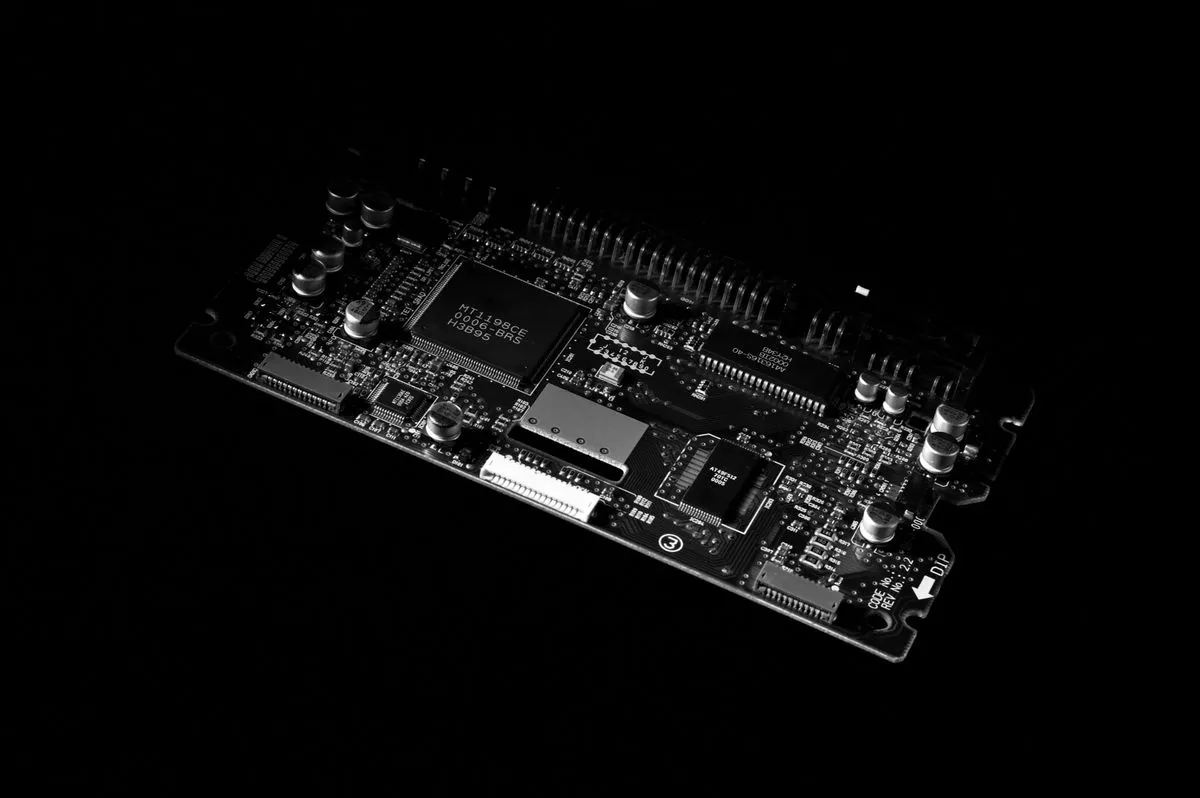
For decades, hardware and firmware engineering have operated as separate disciplines with separate tools, separate processes, and separate organizational structures. Hardware engineers worked in CAD and PLM systems. Firmware engineers worked in IDEs and version control systems. The two groups met at integration, where they discovered, often painfully, that their respective designs didn't quite fit together.
This separation made sense when hardware and firmware were genuinely independent. A circuit board was designed, manufactured, and tested before firmware development began. The interfaces between them were simple and well-defined: a few GPIO pins, a UART port, a SPI bus.
The Convergence Imperative
Modern embedded systems have shattered this clean separation. Consider a modern autonomous mobile robot. Its motor controllers use field-oriented control algorithms that are intimately tied to the specific motor and power electronics hardware. Its sensor fusion system depends on the precise physical placement and timing characteristics of each sensor. Its safety system must coordinate hardware watchdogs, firmware monitoring, and mechanical fail-safes into a coherent safety architecture.
In this environment, designing hardware and firmware sequentially is not just inefficient; it's architecturally wrong. The optimal design of each depends on the other. A change in the motor's electrical characteristics requires a change in the control algorithm. A change in the sensor placement requires a change in the calibration firmware. A change in the safety architecture requires coordinated changes across hardware, firmware, and mechanical subsystems.
The Tool Gap
The fundamental problem is that hardware and firmware engineering use completely different tool ecosystems with no native interoperability.
Hardware engineers live in the world of Altium, KiCad, and SolidWorks. Their artifacts are schematics, PCB layouts, and mechanical assemblies. Their version control is typically file-based, if it exists at all.
Firmware engineers live in the world of VS Code, GCC, and Git. Their artifacts are source files, build configurations, and test suites. Their version control is branch-based with pull requests, code reviews, and CI/CD pipelines.
When these two worlds need to coordinate, which is constantly in modern systems, the bridge is typically a shared spreadsheet listing the pin assignments, a Word document describing the communication protocols, and a series of meetings where misunderstandings are slowly resolved.
This is the last great silo in engineering. And it's finally breaking down.
The Emergence of Co-Design Platforms
A new category of engineering platforms is emerging that treats hardware and firmware as facets of a single system, rather than independent domains that happen to interact. These platforms share several key characteristics.
Unified data model. Hardware components and firmware modules exist as nodes in the same graph. A microcontroller pin is simultaneously a hardware artifact (with electrical characteristics, physical location, and routing constraints) and a firmware artifact (with driver configuration, interrupt priority, and API definition).
Cross-domain traceability. A system requirement can trace directly to both the hardware implementation (a specific circuit) and the firmware implementation (a specific driver) that together fulfill it. When either changes, the impact on the other is immediately visible.
Integrated change management. A hardware change that affects firmware triggers an automatic notification: not an email that might be missed, but a structural dependency in the engineering graph that must be explicitly resolved.
Organizational Implications
The tool revolution is driving an organizational revolution. Companies at the forefront of hardware-firmware co-design are restructuring their teams around subsystems rather than disciplines.
Instead of a hardware team and a firmware team that collaborate on a motor controller, they create a motor controller team that includes both hardware and firmware engineers. This team owns the entire subsystem, from the power electronics schematic to the control algorithm, and is responsible for its performance, reliability, and safety.
This organizational model, borrowed from the "two-pizza team" concept in software engineering, dramatically reduces coordination overhead and accelerates development cycles. But it requires tools that support cross-disciplinary visibility: a firmware engineer on the team needs to understand the hardware constraints, and a hardware engineer needs to understand the firmware architecture.
The Competitive Advantage
Teams that achieve true hardware-firmware co-design report remarkable improvements in development efficiency. Integration issues, historically the largest source of delays and cost overruns in embedded systems development, are caught weeks or months earlier. Design iterations are faster because changes can be evaluated across both domains simultaneously. And the resulting products are better because the hardware and firmware are optimized together rather than independently.
The wall between hardware and firmware was never a natural boundary. It was a limitation of our tools. As that limitation falls, the teams that adapt fastest will build the best products.