Humanoid Robotics: The Final Frontier of Hardware Engineering
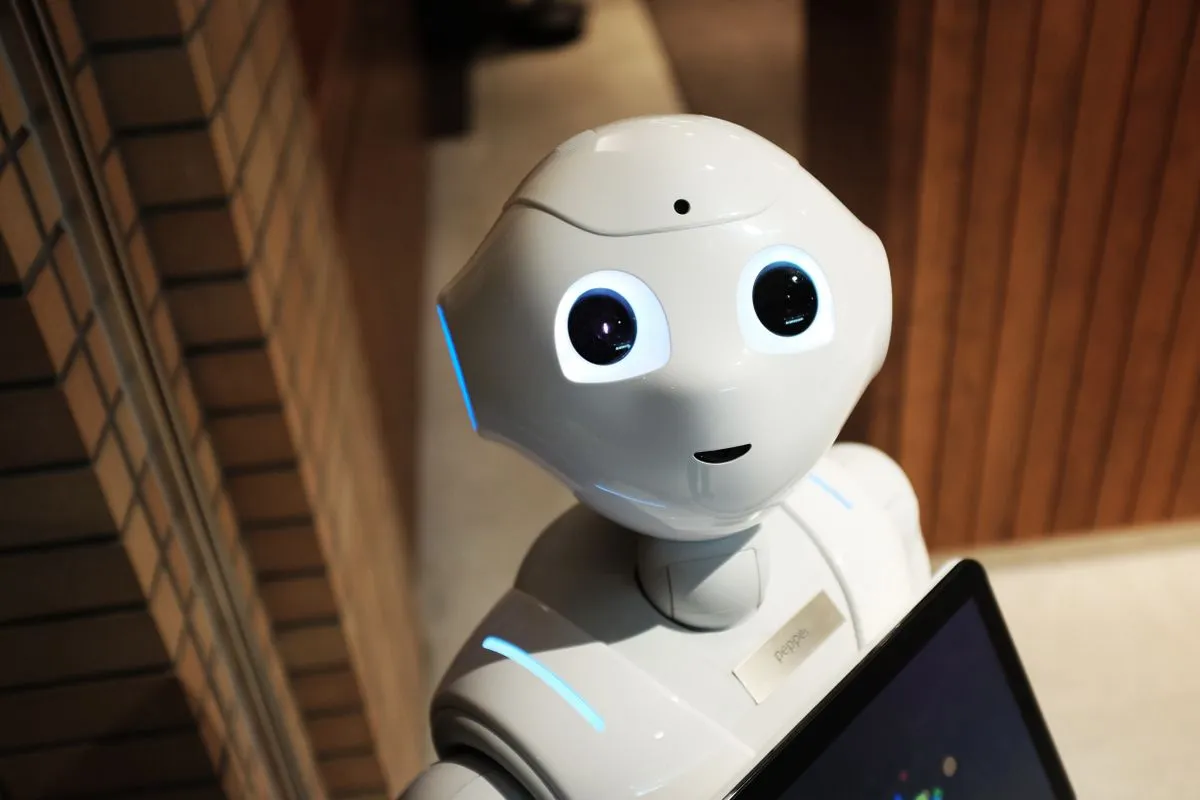
The humanoid robotics race is the most ambitious hardware engineering challenge of the decade. With Boston Dynamics, Tesla (Optimus), Figure, Apptronik, and a growing number of European startups competing to build commercially viable humanoid robots, the field is attracting unprecedented investment and engineering talent.
But behind the impressive demonstration videos lies a set of engineering challenges that are pushing every hardware discipline to its absolute limits.
The Actuator Problem
The human body has approximately 600 muscles, each capable of precise force control, high-speed contraction, and extraordinary endurance. Replicating even a fraction of this capability with electromechanical actuators is the central hardware challenge of humanoid robotics.
Current state-of-the-art actuators for humanoid robots fall into three categories, each with significant limitations.
Harmonic drive actuators offer high gear ratios and zero backlash in a compact package, making them popular for robot arms and hands. However, they are expensive (€500-2000 per joint), have limited shock tolerance, and their wave generator bearings wear out after 10,000-50,000 hours of operation, far short of the lifetime required for commercial deployment.
Quasi-direct drive actuators use low-ratio planetary gearboxes (typically 6:1 to 10:1) to preserve the motor's natural backdrivability. This enables excellent force control and safe human interaction, but at the cost of torque density. A quasi-direct drive actuator for a humanoid knee joint weighs 2-3 kg, adding up to 20+ kg of actuator mass for a full humanoid lower body.
Hydraulic actuators provide unmatched power density and are used in Boston Dynamics' Atlas. However, they require a central hydraulic power unit, create noise, and present leak risks that make them problematic for indoor commercial applications.
The holy grail is an actuator that combines the force control of quasi-direct drive, the torque density of harmonic drives, and the power density of hydraulics. Several teams are working on novel approaches, including magnetically geared actuators and artificial muscle technologies, but none has yet achieved the combination of performance, reliability, and cost required for commercial humanoid robots.
Thermal Management: The Silent Crisis
A humanoid robot performing useful work generates 200-500 watts of heat from its actuators alone. Add the compute hardware (100-200W for real-time perception and planning) and the total thermal dissipation reaches 400-700W, comparable to a high-performance desktop computer, but distributed across a human-shaped form factor with no room for fans or heat sinks.
The thermal management problem is compounded by the fact that actuator performance degrades with temperature. Permanent magnet motors lose torque as magnets heat up. Power electronics derate above 85°C. Gearbox lubricants thin, increasing wear. A humanoid robot that can perform at full capability for 10 minutes but must rest for 20 minutes to cool down has no commercial value.
Solutions being explored include phase-change cooling (using wax or paraffin to absorb heat peaks), liquid cooling loops integrated into the robot's structural frame, and advanced thermal interface materials. But each solution adds mass, complexity, and potential failure modes.
The Wiring Nightmare
A humanoid robot with 30+ degrees of freedom requires hundreds of individual wires: power cables for actuators, signal cables for encoders and sensors, communication buses for distributed controllers, and safety circuits for emergency stops. These wires must flex millions of times as the robot moves, survive mechanical impacts, and avoid electromagnetic interference with each other.
Cable routing in a humanoid form factor is a three-dimensional puzzle with no good solution. Cables that are routed too tightly restrict joint motion. Cables that are routed too loosely get pinched or snagged. Every cable is a potential failure point, and cable failures are among the most common, and most difficult to diagnose, problems in prototype humanoid robots.
The emerging solution is to move as much communication and sensing to the actuator module level as possible, reducing the number of cables that must traverse joints. This requires sophisticated distributed computing architectures where each actuator module contains its own controller, sensors, and communication interface, essentially making each joint a semi-autonomous embedded system.
The Battery Constraint
A commercially useful humanoid robot must operate for at least 4-8 hours on a single charge. With power consumption of 400-700W, this requires a battery capacity of 2-5 kWh, comparable to a small electric vehicle. Current lithium-ion battery technology provides approximately 250 Wh/kg at the cell level, meaning the battery pack alone weighs 8-20 kg.
For a humanoid robot designed to be roughly human-sized (60-80 kg total), the battery represents 10-25% of total mass. This is comparable to the percentage of body mass that humans devote to metabolic energy storage (fat and glycogen), suggesting that we are approaching fundamental physical limits with current battery chemistry.
The Integration Meta-Challenge
Each of the challenges above is difficult in isolation. Combined in a single system, they create a meta-challenge of integration complexity that exceeds anything previously attempted in consumer or commercial robotics.
The actuator design affects the thermal management requirement. The thermal management solution affects the structural design. The structural design affects the cable routing. The cable routing affects the actuator module design. Every subsystem is coupled to every other subsystem in a web of interdependencies that cannot be managed with sequential, silo-based engineering.
This is why the most successful humanoid robotics programs are also the most aggressive adopters of integrated engineering platforms. When a change in one subsystem can cascade through the entire system, you need real-time visibility into those dependencies, not a spreadsheet that was last updated three weeks ago.
The Race Is On
Humanoid robotics is hardware engineering at its most challenging and most exhilarating. The teams that succeed will combine world-class mechanical design, advanced electronics, sophisticated firmware, and, critically, engineering infrastructure that can manage the staggering complexity of building a machine that moves like a human.
The prize is transformative: machines that can work alongside humans in environments designed for human bodies. The engineering challenge is worthy of the ambition.