MCP & AI Agents in Hardware Engineering: Automating Without Breaking Your Processes
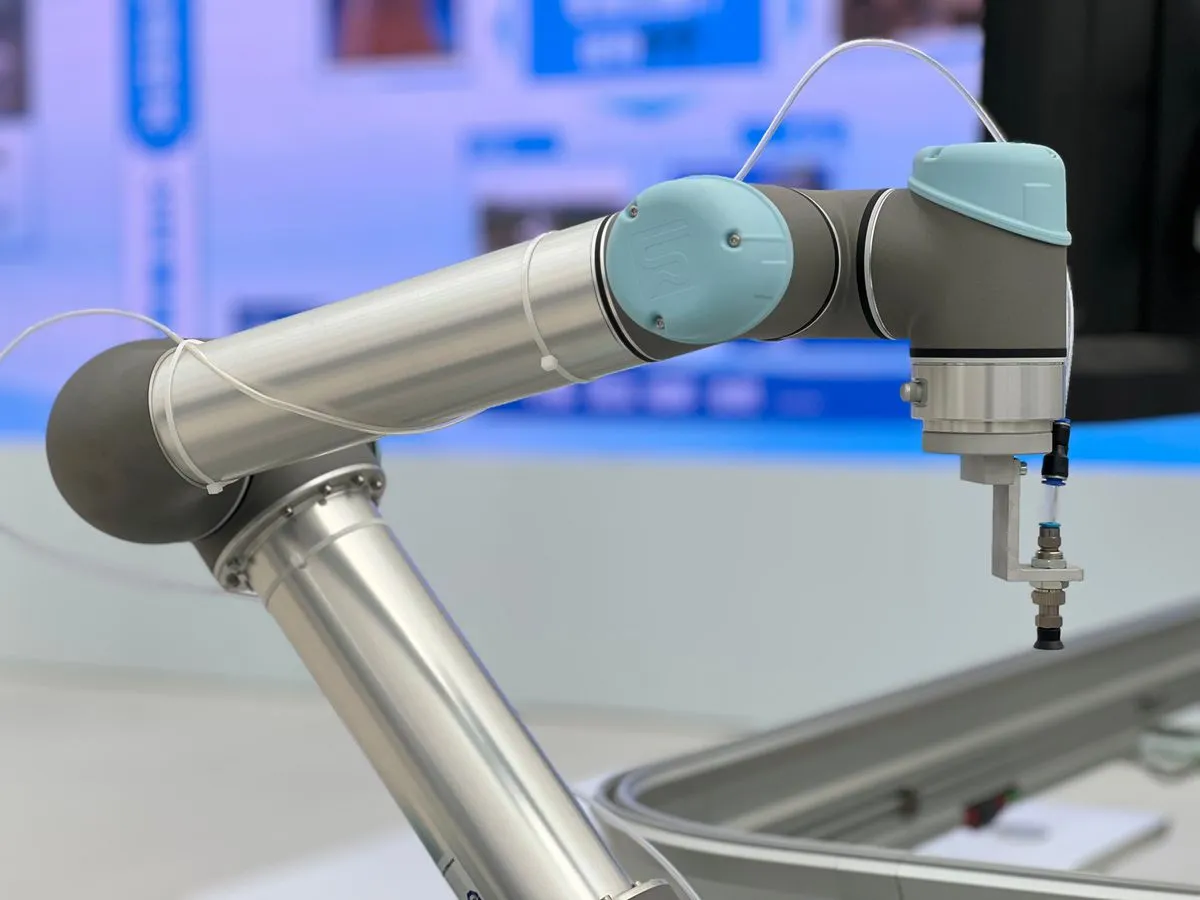
AI agents are entering hardware engineering workflows. Not as a futuristic vision, but as a practical reality. Teams are already using LLM-based agents to draft requirements, populate BOMs, run impact analyses, and generate compliance matrices. But hardware engineering is not software engineering. In software, a deployment mistake can be rolled back in minutes. In hardware, a wrong component specification can cascade through manufacturing, testing, and certification, costing months and millions. The question is not whether AI agents can automate engineering tasks. They can. The question is whether they can do so without compromising the rigorous processes that keep hardware safe, traceable, and certifiable.
What Is MCP and Why It Matters for Engineering
The Model Context Protocol (MCP) is an open standard that defines how AI agents interact with external tools and data sources. Think of it as a structured API layer between an LLM and your engineering platform. Instead of giving an AI agent raw database access (a terrifying prospect for any quality manager), MCP provides scoped, typed, and auditable access to specific capabilities.
For hardware engineering, this is transformative. An AI agent connected via MCP can read a requirement tree, propose a component substitution, or draft a test plan, but only within the boundaries that the engineering platform enforces. The agent operates within the same permission model, validation rules, and workflow constraints as any human engineer.
The Five Security Layers That Protect Your Engineering Data
Integrating AI agents into hardware workflows requires defense in depth. Here are the five layers that ensure automation cannot compromise engineering integrity.
Layer 1: Scoped Access Permissions
Every MCP connection defines exactly which resources the agent can read and which actions it can perform. An agent tasked with BOM population gets read access to the requirement tree and write access to BOM line items, nothing else. It cannot modify requirements, approve design reviews, or release baselines. The permission model mirrors role-based access control for human engineers, ensuring that an AI agent has no more capability than the human role it assists.
Layer 2: Schema Validation at Every Write
When an AI agent creates or modifies an engineering artifact (a requirement, a component specification, a test case), the engineering platform validates the data against the metamodel schema before persisting it. If the agent attempts to create a requirement without a rationale field, or links a component to an incompatible interface, the write is rejected with a structured error. The same validation rules apply to humans and machines. No exceptions.
Layer 3: Baseline Protection
Frozen baselines are the foundation of configuration management. When a design baseline is locked (for a design review, a regulatory submission, or a manufacturing release), no entity, human or automated, can modify it. AI agents operating via MCP encounter the same immutable baseline constraints. If an agent attempts to modify a frozen requirement, the platform rejects the action and logs the attempt. This is not a soft guideline. It is an architectural constraint enforced at the data layer.
Layer 4: Full Audit Trail
Every action performed by an AI agent is logged with the same granularity as human actions: timestamp, actor identity (clearly marked as an AI agent), action type, before/after state, and justification. This audit trail is essential for regulatory compliance. When an auditor asks "who changed this specification and why?", the answer must be traceable whether the change was made by an engineer or an agent. The audit log distinguishes human and automated actions, providing complete transparency into the engineering history.
Layer 5: Human-in-the-Loop Validation
For safety-critical decisions (design approvals, baseline releases, certification submissions), the platform enforces human approval gates that cannot be bypassed by automation. An AI agent can prepare a design review package, populate compliance matrices, and flag potential issues, but it cannot approve the review. The human engineer retains decision authority for all actions that affect product safety and regulatory status.
Practical Automation Scenarios
With these security layers in place, AI agents can safely automate a wide range of engineering tasks.
Requirements Drafting. An agent reads a regulatory standard (IEC 62304, ISO 26262, DO-178C) and generates draft requirements mapped to each clause. The engineer reviews, refines, and approves. Time saved: 60-80% on initial drafting.
BOM Cross-Referencing. An agent compares the design BOM against approved vendor lists, lifecycle status databases (checking for obsolescence), and compliance databases (REACH, RoHS, conflict minerals). Discrepancies are flagged for human review. Time saved: hours of manual cross-referencing per BOM revision.
Impact Analysis Preparation. When a component change is proposed, an agent traverses the traceability graph to identify all affected requirements, test cases, and downstream assemblies. The impact report is generated automatically; the engineer validates and decides. Time saved: what previously took days of manual tracing takes minutes.
Test Plan Generation. An agent reads requirements and their verification methods, then generates draft test procedures with expected results. The test engineer reviews and adapts for their specific test setup. Time saved: 50-70% on test plan documentation.
Compliance Matrix Population. For regulatory submissions, an agent maps requirements to evidence artifacts (test reports, analysis documents, design descriptions) and populates the compliance matrix. The regulatory affairs team reviews for completeness. Time saved: weeks of manual document cross-referencing.
The Role of Each Development Phase
AI agent integration is not uniform across the development lifecycle. Each phase has different automation opportunities and different risk profiles.
Concept Phase. Agents have the most freedom here. They can explore design alternatives, generate trade study analyses, and propose system architectures. Validation is lighter because decisions are not yet frozen.
Design Phase. Agents assist with detailed specification, BOM construction, and interface definition. Schema validation becomes critical as design data must be precise and consistent. Baseline management begins to constrain what agents can modify.
Verification Phase. Agents generate test plans and help analyze test results. They can flag anomalies in test data and trace results back to requirements. The audit trail is especially important here for certification evidence.
Validation & Release Phase. Agent automation is most restricted. Agents prepare documentation packages but cannot approve releases. Human-in-the-loop gates are mandatory. Every automated action is scrutinized for regulatory compliance.
Maintenance Phase. Agents monitor field data, flag potential issues, and prepare change requests. Impact analysis automation is particularly valuable when evaluating the ripple effects of a proposed modification on a fielded product.
Why Graph-Based Platforms Enable Safe AI Integration
Traditional file-based engineering data (spreadsheets, documents, folder structures) is inherently unsafe for AI agent access. There is no schema to validate against, no permission model to enforce, no baseline mechanism to protect, and no structured audit trail.
Graph-based engineering platforms provide the structured data foundation that safe AI integration requires. Every engineering artifact is a typed node with defined attributes and relationships. Every modification is validated, permissioned, and logged. Every baseline is an immutable snapshot. The graph structure itself encodes the engineering constraints that prevent automation from creating inconsistencies.
This is why MCP integration with graph-based platforms is fundamentally different from giving an AI agent access to a shared drive full of Excel files. The platform provides the guardrails that make automation safe.
Getting Started with MCP Integration
Start small. Identify one high-volume, low-risk task, such as populating a BOM from a design specification or generating a compliance matrix from existing requirement-evidence links. Configure MCP access with minimal permissions. Run the agent in a review-only mode where all outputs require human approval before committing. Measure time savings and error rates. Expand scope gradually as confidence grows.
The teams that will benefit most from AI agent automation are those that already have structured engineering data, clear process definitions, and robust configuration management. AI agents amplify existing engineering discipline; they do not replace the need for it.