Surgical Robotics in 2026: The Hardware Challenges No One Talks About
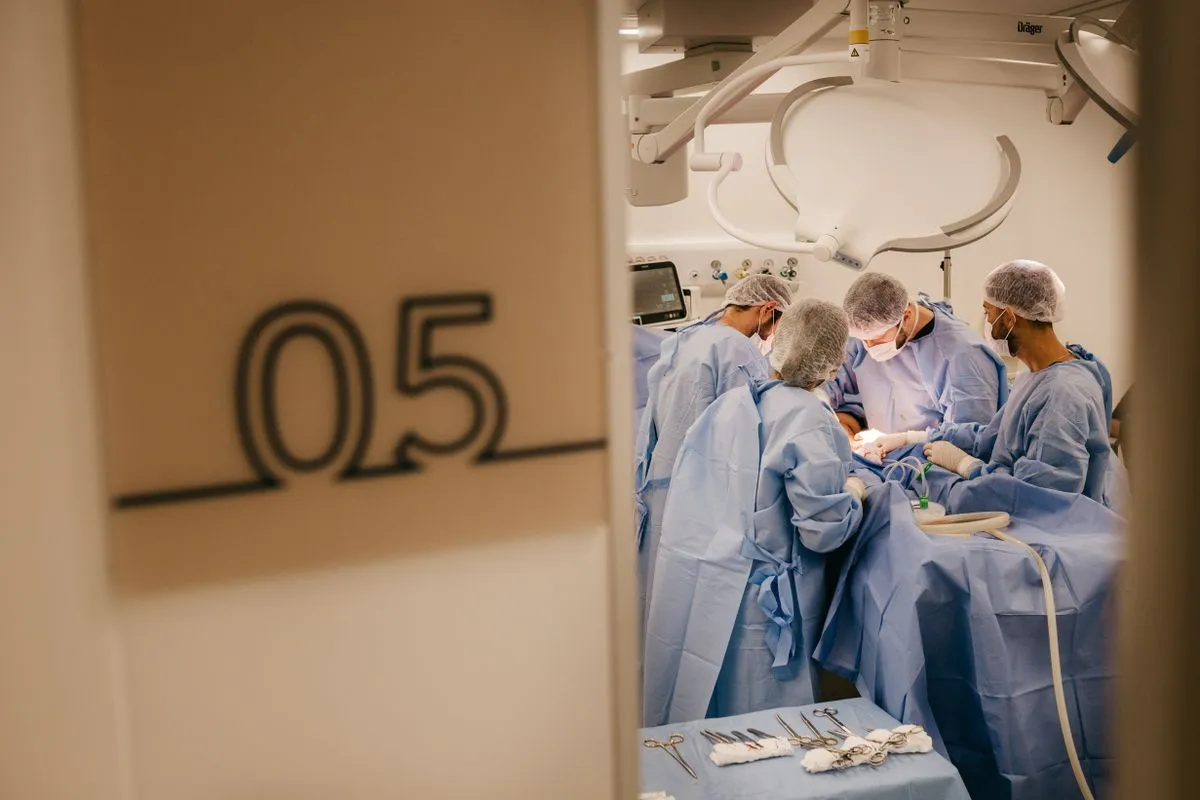
The surgical robotics market is projected to reach $18 billion by 2028, but behind the investor presentations and hospital press releases lies a brutally demanding hardware engineering reality. Building a robot that operates inside the human body is not simply a matter of miniaturizing industrial robotics. It requires solving engineering problems that have no parallel in any other domain.
The Sterilization Paradox
Every surgical instrument must withstand repeated sterilization cycles, typically autoclave processing at 134°C and 2 bar pressure for 18 minutes. This seemingly simple requirement has cascading implications across the entire hardware design.
Electronics cannot survive autoclave temperatures. This means that any sensor, actuator driver, or communication module near the surgical site must either be hermetically sealed to military-grade standards or designed as a single-use disposable. The first approach adds cost and complexity. The second creates a recurring revenue model but demands design-for-manufacturing optimization that most robotics teams are unprepared for.
The mechanical components face their own sterilization challenges. Lubricants wash out. Polymer seals degrade. Surface treatments corrode. Every material choice must be validated not just for initial performance but for performance after 500+ sterilization cycles. This validation process alone can consume months of engineering effort.
Latency: The Invisible Enemy
In industrial robotics, a 10-millisecond control loop latency is perfectly acceptable. In surgical robotics, it can mean the difference between a successful procedure and a catastrophic injury.
The human surgeon's proprioception, the unconscious sense of where their hands are in space, operates at approximately 5ms resolution. Any robotic system that interposes itself between the surgeon's hands and the patient must match or exceed this temporal resolution. This means the entire signal chain, from the master controller sensors through the communication link to the slave robot actuators, must complete within 5ms.
Achieving this latency with the computational overhead required for safety monitoring, force limiting, and workspace boundary enforcement is one of the hardest real-time systems engineering challenges in existence. It requires custom FPGA-based controllers, deterministic communication protocols, and firmware architectures that guarantee worst-case execution times.
Haptic Feedback: Restoring the Sense of Touch
Perhaps the most underappreciated challenge in surgical robotics is haptic feedback: giving the surgeon a sense of the forces being applied to tissue. Without haptic feedback, surgeons rely entirely on visual cues, which significantly increases cognitive load and the risk of applying excessive force.
The hardware challenge is bidirectional. On the patient side, force sensors must be miniaturized to fit within instruments as small as 5mm in diameter, must survive sterilization, and must maintain calibration accuracy over their lifetime. On the surgeon side, haptic actuators must generate forces that feel natural and intuitive, without introducing instability in the control loop.
The physics of haptic rendering are unforgiving. The human sense of touch can detect forces as small as 0.01 Newtons and stiffness changes as subtle as 10%. Meeting these thresholds with a motorized mechanism that is also lightweight, quiet, and backdriving requires extraordinary mechanical design precision.
The Regulatory Gauntlet
Surgical robots are Class IIb or Class III medical devices under the European Medical Device Regulation (MDR). This classification subjects them to the most demanding regulatory pathway in the medical device world, including clinical evidence requirements that can take years to fulfill.
For hardware teams, the regulatory requirements translate into documentation obligations that dwarf those in any other industry. Every design decision must be justified. Every material must be biocompatibility-tested. Every software component must be verified according to IEC 62304. Every risk must be analyzed according to ISO 14971.
The traceability challenge is immense. A typical surgical robot has thousands of components, each with its own requirements, specifications, test results, and supplier qualifications. Maintaining this traceability matrix manually is a full-time job for multiple engineers, or a perfect use case for graph-based engineering platforms.
The Integration Challenge
A surgical robot is arguably the most complex integration challenge in modern engineering. It combines precision mechanics (sub-millimeter positioning), advanced electronics (real-time control at microsecond resolution), sophisticated firmware (deterministic safety-critical software), and human factors engineering (surgeon interface design), all within a form factor that must fit in an operating room alongside the surgical team.
The integration phase is where most surgical robotics programs experience their most painful delays. Components that worked perfectly in isolation fail when combined. Electromagnetic interference between the motor drivers and the sensor electronics. Thermal expansion that shifts the kinematic calibration. Firmware race conditions that only manifest under specific combinations of surgeon inputs.
These integration failures are almost always the result of insufficient cross-domain traceability during design. When the motor driver team doesn't know about the sensor team's EMI sensitivity requirements (because those requirements live in a different tool, managed by a different team), integration surprises are inevitable.
The Path Forward
The surgical robotics teams that succeed will be those that treat hardware-firmware-mechanical integration not as a phase that happens after design, but as an architectural discipline that shapes design from the beginning. This requires tools that provide real-time visibility across all engineering domains, automated change impact analysis, and audit-proof traceability from requirement to test result.
The stakes are too high, literally life and death, for anything less.