Wind Energy's Hardware Engineering Boom: Opportunities in Next-Gen Turbine Systems
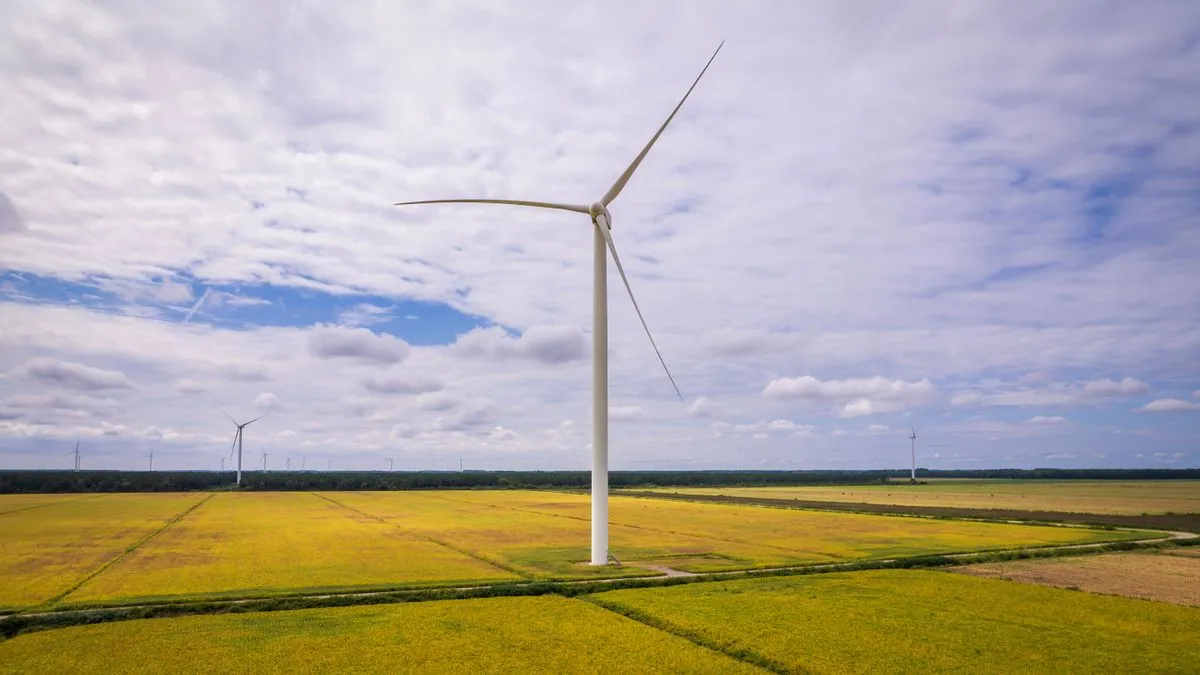
The European wind energy industry is in the midst of its most significant hardware engineering challenge since the first offshore wind farms were deployed two decades ago. The push toward 15+ MW offshore turbines, floating platforms, and grid-scale energy storage is creating unprecedented demand for hardware engineers across power electronics, control systems, structural monitoring, and subsea systems.
The Scale-Up Challenge
The trajectory of wind turbine size has been relentless. The typical offshore turbine in 2015 was 6 MW with a 150m rotor diameter. In 2020, it was 10 MW with a 190m rotor. In 2026, the leading designs, Vestas V236-15.0 MW and Siemens Gamesa SG 14-236 DD, are 14-15 MW with 236m rotors. Prototypes of 18-20 MW machines are in testing.
Each step up in turbine size creates cascading hardware engineering challenges. The generator must produce more power without proportionally increasing weight. The power electronics must convert higher voltages and currents with greater efficiency. The control system must manage larger structural loads with higher precision. The condition monitoring system must detect faults earlier because the cost of failure is higher.
For hardware engineers, this scale-up creates a rich landscape of design challenges.
Power Electronics: The Efficiency Frontier
A 15 MW turbine at full output generates enough electricity to power 15,000 homes. Converting this power from the variable-frequency output of the generator to the fixed-frequency, fixed-voltage requirements of the grid requires power electronics systems of extraordinary capability.
The transition from silicon to silicon carbide (SiC) and gallium nitride (GaN) power devices is transforming turbine power electronics. SiC MOSFETs switching at 50-100 kHz reduce converter size and weight by 30-50% compared to silicon IGBTs while improving efficiency by 1-2 percentage points. At 15 MW, a 1% efficiency improvement represents 150 kW, enough to justify a significant investment in advanced semiconductor technology.
But SiC and GaN bring their own challenges. Higher switching speeds generate steeper voltage transients (dv/dt) that stress motor insulation and create electromagnetic interference. The gate drive circuits must handle faster switching with precise timing to avoid shoot-through and excessive switching losses. The thermal management system must handle different loss distributions than silicon-based designs.
Control Systems: Managing the Uncontrollable
Wind is inherently turbulent, variable, and unpredictable. The control system of a modern wind turbine must manage this chaotic input to maximize energy capture while protecting the turbine structure from damaging loads.
The state of the art in turbine control is moving from classical PID-based controllers to model-predictive control (MPC) and reinforcement learning approaches. These algorithms can anticipate wind changes using LIDAR-based wind preview systems, optimize blade pitch and generator torque simultaneously, and adapt to changing turbine conditions as components age.
For hardware engineers, these advanced control strategies demand real-time computing platforms with deterministic latency, high-bandwidth sensor interfaces, and reliable communication links to actuators. The control hardware must operate continuously for 25+ years in harsh marine environments with minimal maintenance, a reliability requirement that exceeds most military specifications.
Condition Monitoring: Predicting the Unpredictable
An unplanned maintenance event on an offshore wind turbine costs €100,000-500,000 when you factor in vessel hire, crew deployment, and lost energy production. Condition monitoring systems that can predict failures before they occur are therefore enormously valuable.
Modern condition monitoring systems combine vibration sensors (accelerometers on bearings and gearboxes), electrical signatures (current and voltage analysis of the generator), acoustic emissions, temperature monitoring, and oil particle analysis into a comprehensive health assessment of the turbine drivetrain.
The hardware engineering challenge is threefold. First, the sensors must survive 25 years in a marine environment with extreme temperature cycling, salt spray, and mechanical vibration. Second, the data acquisition system must sample multiple channels at high frequency (50-100 kHz for vibration) while consuming minimal power. Third, the edge computing platform must run increasingly sophisticated analysis algorithms, including neural network-based anomaly detection, locally on the turbine to reduce communication bandwidth to shore.
Floating Offshore Wind: The Next Frontier
Perhaps the most exciting hardware engineering challenge in wind energy is floating offshore wind. Traditional offshore turbines are mounted on fixed foundations driven into the seabed, a technique limited to water depths of approximately 60 meters. Floating platforms can access much deeper waters, opening vast new areas for wind energy development.
Floating turbines introduce entirely new hardware engineering challenges. The turbine must operate on a platform that pitches, rolls, and heaves with the waves. The control system must compensate for platform motion. The power cable must withstand dynamic loading. The mooring system must survive extreme storms while allowing the platform to move with the waves.
The structural monitoring requirements for floating platforms are particularly demanding. Fatigue loads are more complex and less predictable than for fixed foundations. The mooring chains and anchors are subject to corrosion and wear in the marine environment. And the consequences of structural failure, a 15 MW turbine weighing thousands of tonnes breaking free from its moorings, are catastrophic.
The Opportunity for Engineers
The wind energy sector needs hardware engineers across all disciplines: power electronics designers for next-generation converters, embedded systems engineers for control and monitoring platforms, mechanical engineers for drivetrain and structural systems, and systems engineers who can integrate all of these domains into a coherent, reliable, and cost-effective turbine system.
The engineering challenges are real, the impact is meaningful, and the career opportunities are substantial. For hardware engineers looking for work that combines technical depth with environmental purpose, wind energy in 2026 is hard to beat.